Key takeaways
- Separate clinical and nonclinical areas, and use separate tools for each.
- Use registered disinfectants and follow label contact times.
- Waiting rooms and restrooms need frequent attention to high-touch surfaces.
- Staff, not cleaners, usually handle sharps and medical waste.
Know the zones
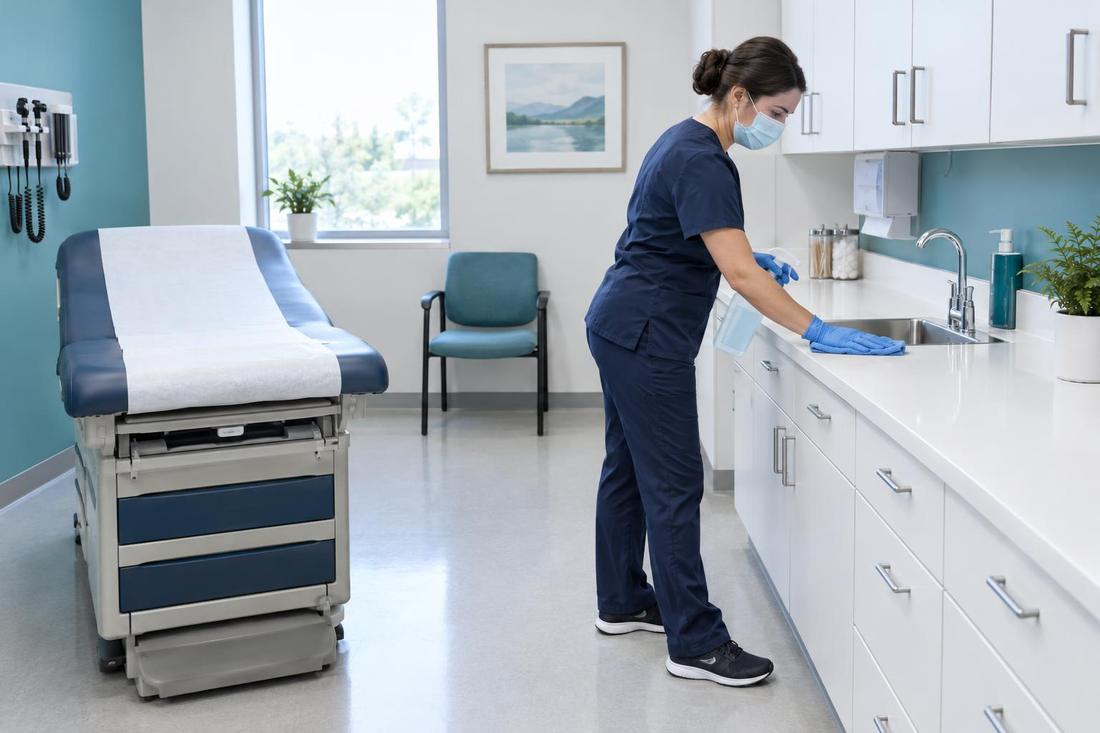
Medical offices have waiting areas, exam rooms, procedure rooms, restrooms and staff areas. Each has different risk. Cleaners follow a plan that treats each zone appropriately and avoids moving tools between them.
Color-coded cloths and mops help prevent cross-contamination.
Products and procedures
Healthcare cleaning relies on registered disinfectants used according to the label. Follow your own infection control policies and any guidance from public health agencies. Crews should be trained and follow written procedures.
Ask your cleaner for a written protocol.
Waiting rooms and restrooms
Visitors touch chairs, door handles, counters, magazines and restroom fixtures. Frequent sanitizing and prompt trash removal reduce risk and keep the space welcoming. Consider midday checks during busy days.
Keep floors dry and entrances clean.
What cleaners do not handle
Sharps containers and regulated medical waste are handled by trained staff and licensed vendors under their own rules. Clarify these boundaries in writing so everyone knows who is responsible.
Set clear rules for patient areas.
Official sources and further reading
- Centers for Disease Control and Prevention
- Occupational Safety and Health Administration
- U.S. EPA: List N Disinfectants
These are independent organizations. Links open in a new tab.
Quick answers
Do cleaners need special training?
Yes. Crews should be trained on healthcare procedures, products and safety.
Who handles medical waste?
Trained staff and specialized vendors. Cleaners do not handle regulated waste.