Key takeaways
- Daily tasks cover trash, restrooms, floors, glass entrances and high-touch surfaces.
- Weekly and monthly tasks reach dusting, detail work, carpets and hard floors.
- Special projects like stripping floors or deep cleans are scheduled separately.
- A written scope shows exactly what is and is not included.
Daily tasks
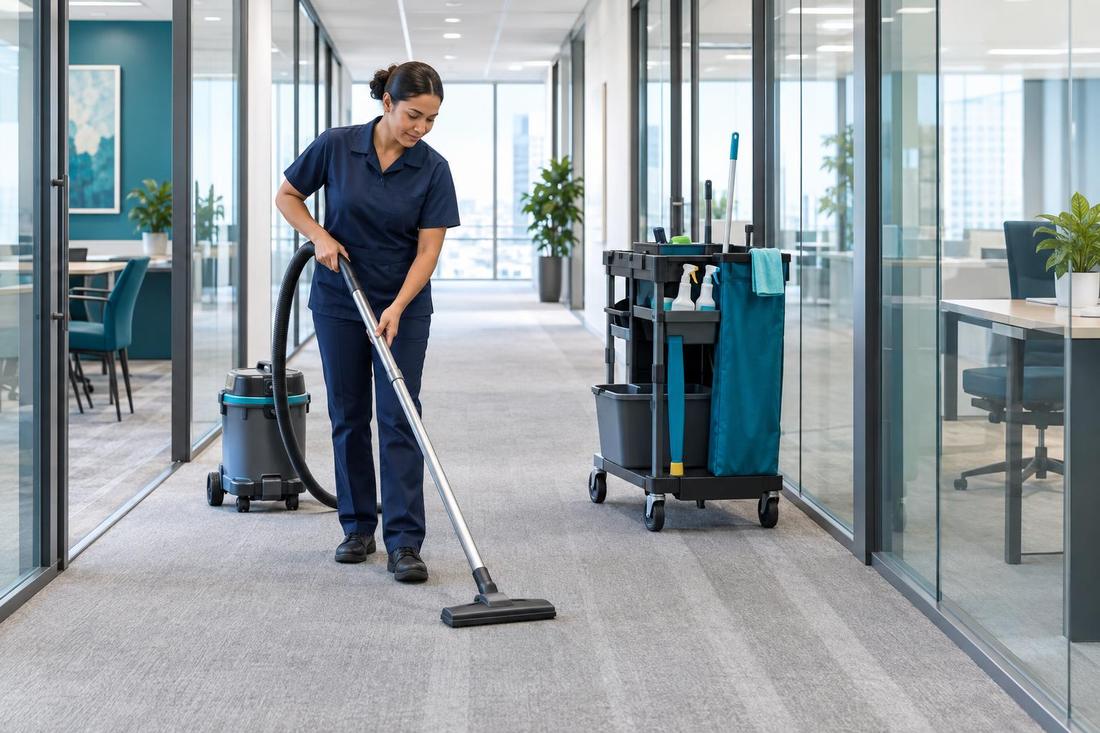
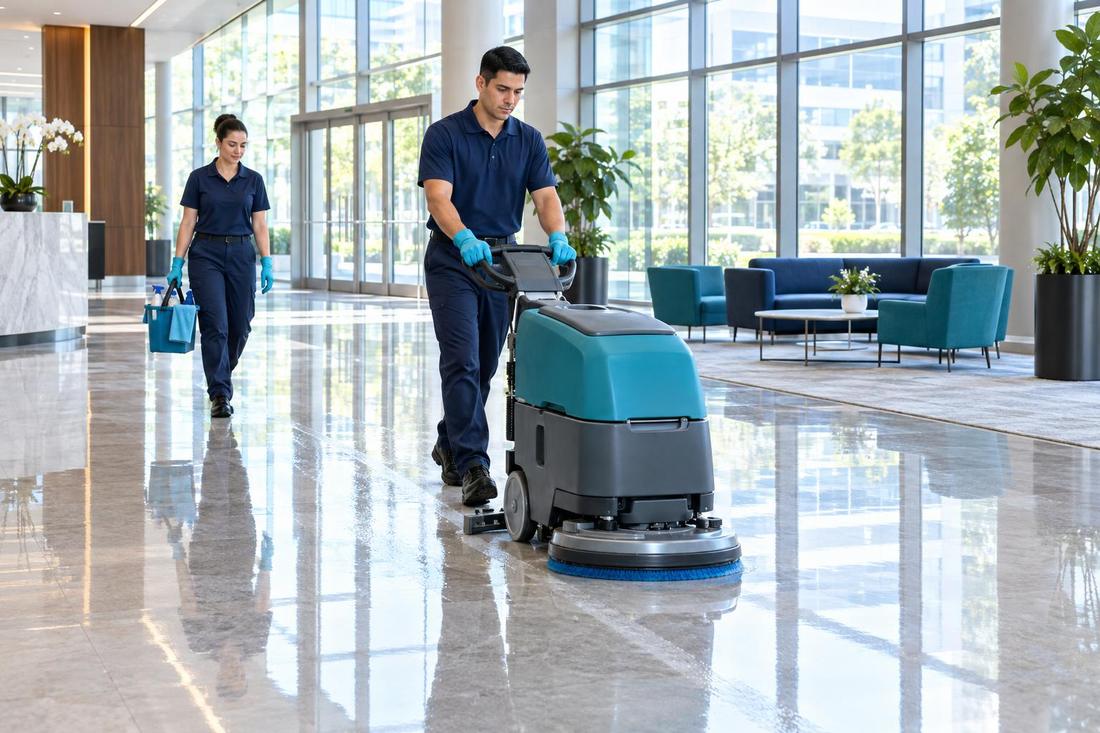
Most commercial programs include emptying trash, vacuuming carpets, sweeping and mopping hard floors, cleaning and restocking restrooms, wiping counters and sanitizing high-touch surfaces like door handles and light switches. Entrance glass and lobbies are often included because they shape first impressions.
Break rooms and kitchens are cleaned daily in busy buildings.
Weekly tasks
Weekly work often covers dusting ledges and vents within reach, detail cleaning of restrooms, spot cleaning walls and glass, cleaning drinking fountains and wiping furniture. Some buildings add deeper mopping or edge vacuuming.
Tasks that need less frequency get their own schedule.
Monthly and periodic tasks
Monthly and quarterly tasks include carpet extraction, hard floor scrubbing and recoating, high dusting, window cleaning and detail work on baseboards and fixtures. These keep the building from slowly slipping out of shape.
Many companies bundle them into an annual calendar.
What is usually extra
Items like post-construction cleaning, exterior pressure washing, upholstery cleaning and event cleanup are usually quoted as projects. Confirm in writing which items are included, so there are no surprises.
Ask how requests for extra work are handled.
Official sources and further reading
- ISSA: The Worldwide Cleaning Industry Association
- Centers for Disease Control and Prevention
- Better Business Bureau
These are independent organizations. Links open in a new tab.
Quick answers
Does commercial cleaning include supplies?
It depends on the agreement. Some include paper products and liners, others do not. Ask and write it down.
How often should offices be cleaned?
Most offices are cleaned several nights a week, with lighter buildings on a weekly schedule.