Key takeaways
- Restrooms shape how visitors judge a business, so consistency matters.
- Clean top to bottom and use separate cloths to avoid spreading germs.
- Stock soap, towels and tissue before they run out.
- Report leaks, clogs and broken dispensers fast.
What a good restroom looks like
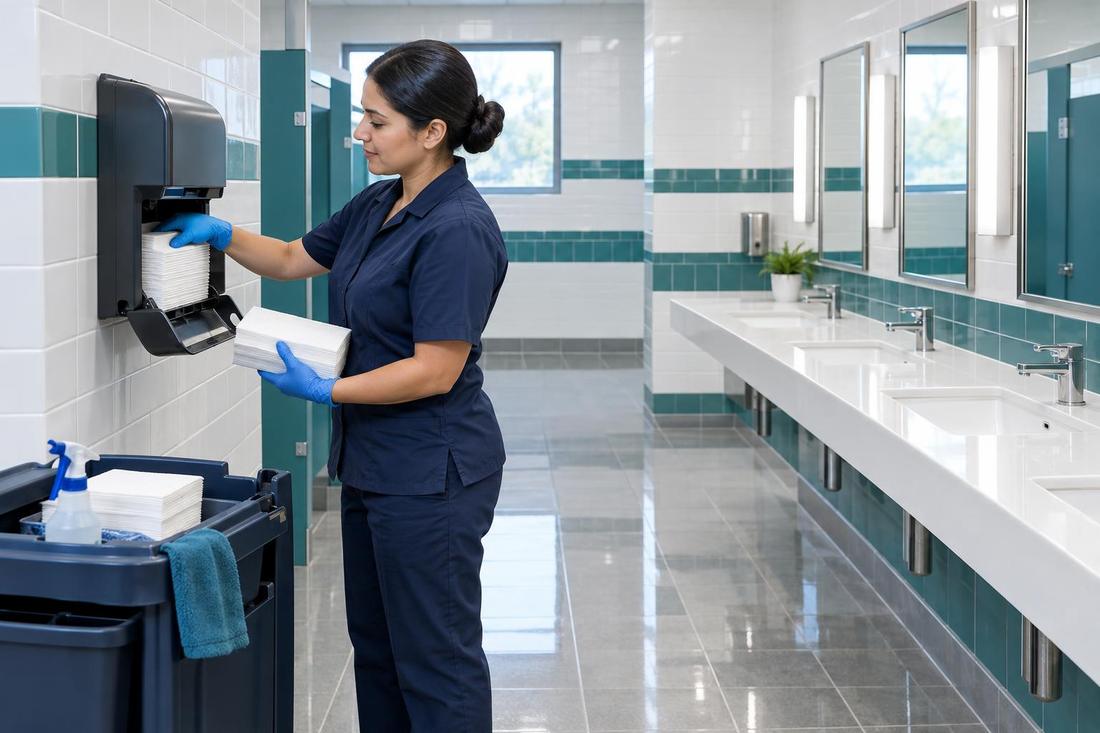
A well-kept restroom has clean toilets and urinals, spotless sinks and mirrors, dry floors, working dispensers and no odor. Partitions and walls are wiped, and trash is emptied before it overflows.
Small details, like clean grout lines, say a lot.
Method matters
Cleaners work top to bottom and from clean to dirty areas. Color-coded cloths and tools keep restroom tools away from other areas. Disinfectant needs the contact time on its label to work, so quick wipes are not enough.
Floors are mopped last, ending at the door.
Frequency
A busy restroom may need several checks a day, while a quiet office can manage with a nightly clean. High-use buildings often add a day porter. Review the schedule if complaints rise.
Event days may need extra attention.
Supplies and reporting
Plan stock levels for soap, hand towels, tissue and liners, and make sure the dispensers match the refills. A cleaner who reports leaks, clogs and broken dispensers saves you from bigger problems.
Ask how low stock is reported.
Official sources and further reading
- Centers for Disease Control and Prevention
- U.S. EPA: Safer Choice
- Occupational Safety and Health Administration
These are independent organizations. Links open in a new tab.
Quick answers
How often should restrooms be checked?
Busy restrooms benefit from several checks a day. Quiet ones may need one nightly clean.
Who provides the paper products?
Either you or the cleaning company. Agree on this in writing.