Key takeaways
- Use a written checklist tied to your scope, not just a general impression.
- Inspect at the same time on a regular schedule and note the results.
- Look at restrooms, floors, glass, trash and high-touch areas first.
- Share findings with your provider and track whether problems repeat.
Start with the scope
You can only judge quality against a standard. Use the written scope as your checklist: each area, each task and how often it is done. If the scope is vague, write it down together.
Agree on what good looks like.
Inspect the same way each time
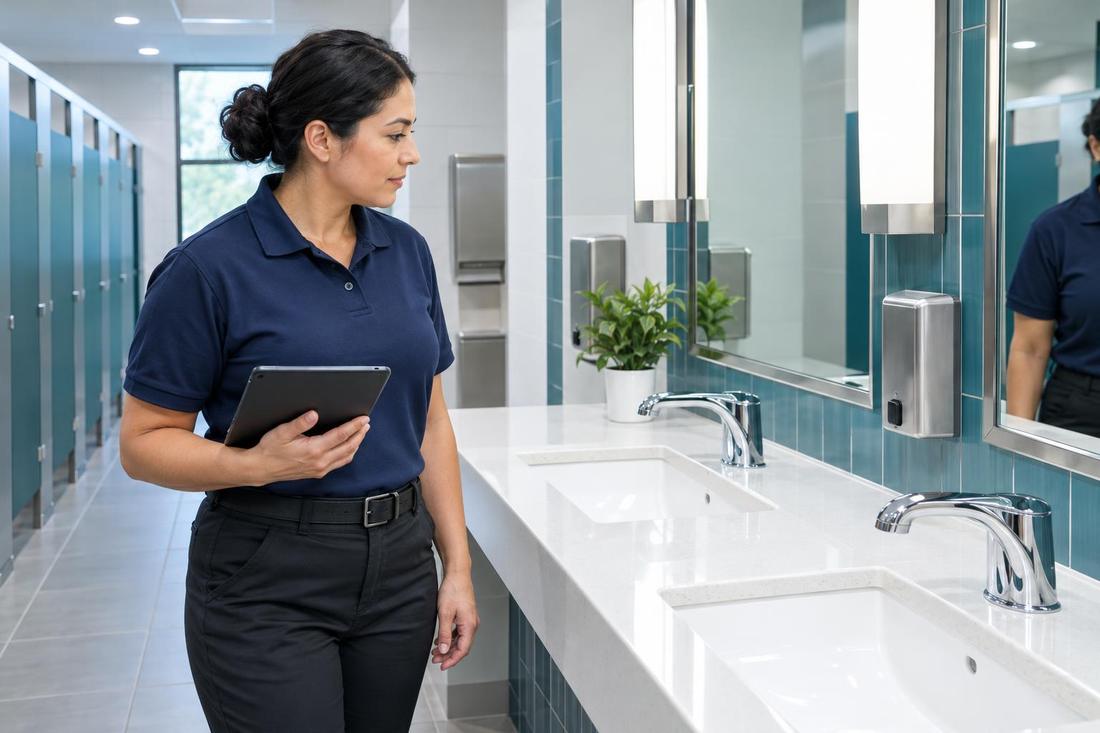
Walk the building on a regular schedule, ideally early in the day after cleaning. Score areas on a simple scale and take photos of issues. Compare results over time, not just once.
Invite your cleaner to join occasionally.
Look where it matters
Check restrooms, entrances, floors and edges, glass, trash bins, break rooms and high-touch surfaces. Look at corners, baseboards and under furniture. Smell matters too.
Do not forget to check supplies.
Fix problems fast
Send findings to your supervisor with photos and dates, and ask for a response. Track whether issues repeat. A reliable company corrects problems quickly, finds the cause and changes the plan when needed.
If problems keep returning, it is time to talk about the relationship.
Official sources and further reading
- ISSA: The Worldwide Cleaning Industry Association
- Better Business Bureau
- Occupational Safety and Health Administration
These are independent organizations. Links open in a new tab.
Quick answers
How often should I inspect?
Weekly or monthly works for many buildings, with extra checks after changes.
What if the same issue repeats?
Ask for a cause, a fix and a follow-up. If it continues, consider changing the scope or provider.