
Key takeaways
- Traffic, restrooms and the type of business decide how often cleaning is needed.
- Nightly service keeps buildings fresh each morning without disrupting work.
- Weekly service suits light-use offices and low-traffic spaces.
- You can mix schedules: daily basics with weekly detail and periodic deep cleans.
Think about traffic
A busy lobby, many restrooms and a break room create work every day. A small office with few visitors may stay presentable with weekly cleaning. Count the people, the visitors and the shared spaces, and then match the schedule.
When in doubt, start more often, then adjust.
Why nightly works well
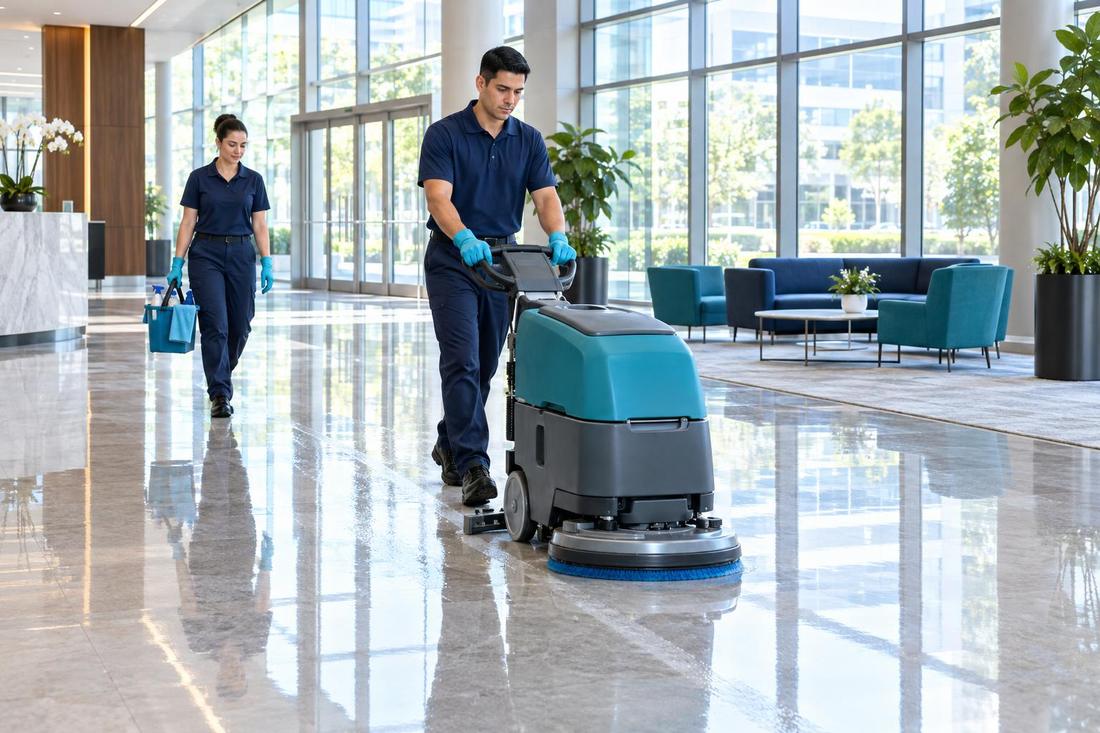
Nightly cleaning happens after the workday, so floors dry, trash is out and restrooms are fresh before people return. It also avoids vacuum noise and wet floors during business hours.
It is popular with offices, banks and medical practices.
When weekly is enough
Low-traffic offices, storage-heavy suites and small studios often do well with weekly cleaning plus restroom restocking. Add a mid-week restroom visit if the space is shared.
Consider a day porter for a busy lobby.
Mix and adjust
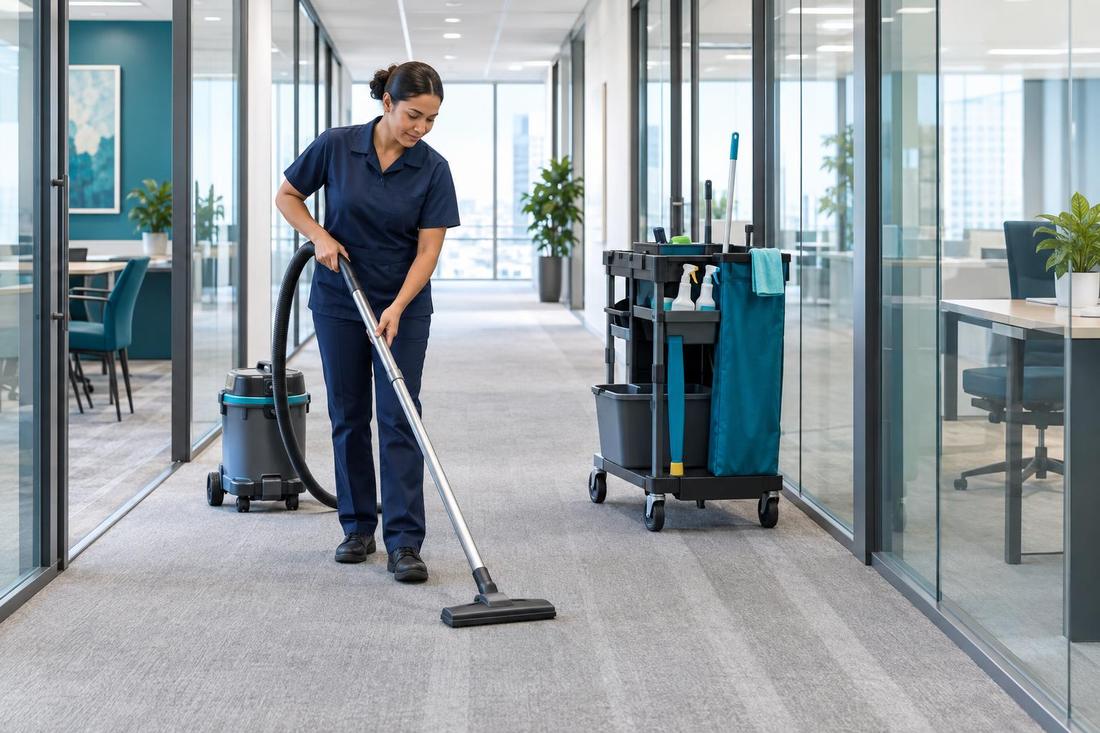
Many buildings use nightly basics, weekly detail work, monthly floor care and a yearly deep clean. Review the schedule after a month or two and adjust, because needs shift as teams grow.
Ask your cleaner to recommend changes after inspections.
Official sources and further reading
- ISSA: The Worldwide Cleaning Industry Association
- Better Business Bureau
- Occupational Safety and Health Administration
These are independent organizations. Links open in a new tab.
Quick answers
Can we change the schedule later?
Yes. Good companies adjust as your needs change.
Is daytime cleaning ever better?
Yes. Day porters help restrooms and lobbies stay fresh during busy hours.