Key takeaways
- Clean in stages: rough clean, detail clean, then final clean before turnover.
- Work top to bottom, ceilings and fixtures first, floors last.
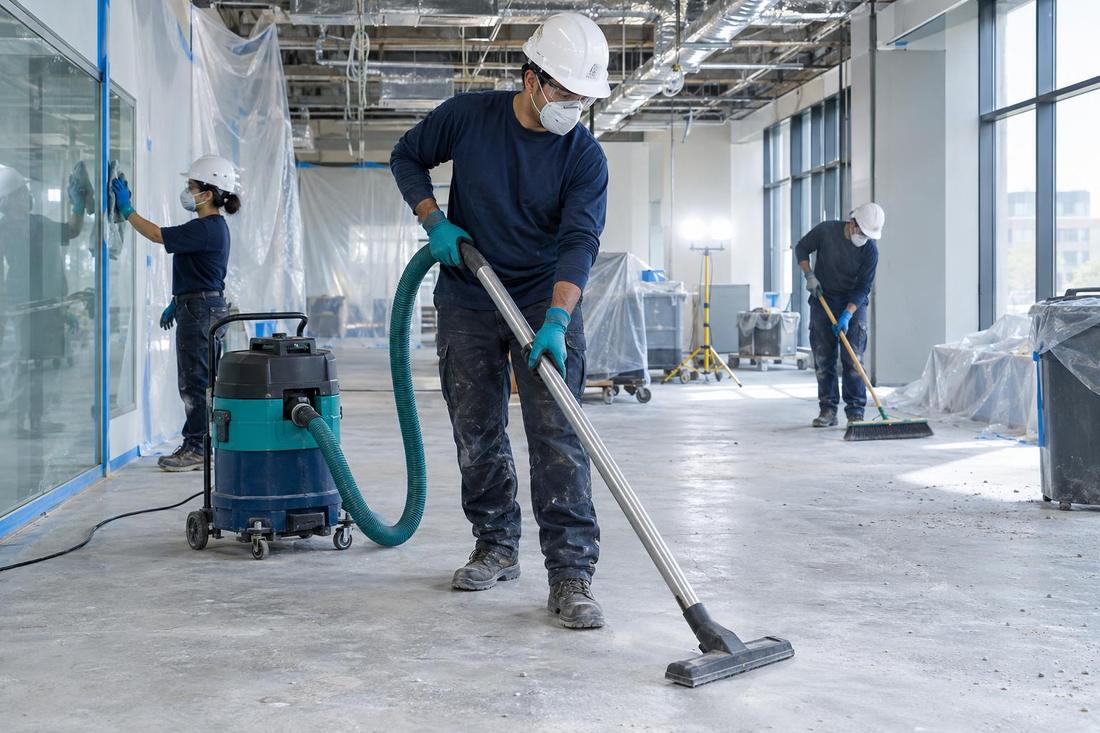
- Use HEPA vacuums to capture fine construction dust.
- Walk the space with your contractor and make a punch list.
Rough clean
After the trades finish, remove debris, packaging, scraps and large dust. Vacuum or sweep floors, wipe rough surfaces and clear work areas so detail work can begin. Remove protective coverings carefully so dust does not fall again.
Dispose of construction waste properly.
Detail clean
Clean from the top down: ceilings, vents, lights, walls, windows and frames, cabinets, counters, fixtures, restrooms and finally floors. Remove stickers, paint spots and adhesive from glass and surfaces with suitable tools.
Check inside drawers, cabinets and closets.
Final clean
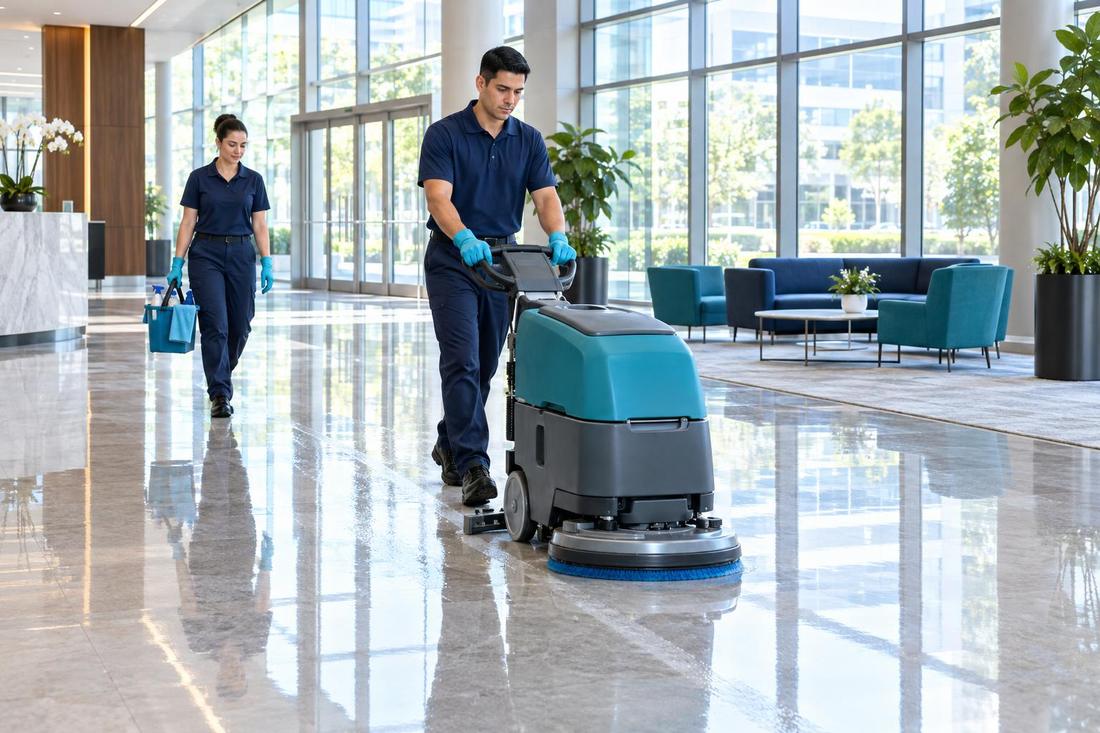
Just before turnover, do a last pass to remove new dust and fingerprints. Polish glass and fixtures, vacuum carpet, mop floors and make sure restrooms, kitchens and entrances are spotless.
Replace filters if the contractor has not.
Walk and punch list
Walk the space with the contractor or owner, note missed spots and fix them promptly. A written list prevents arguments and gets the space ready for opening.
Keep a copy for your records.
Official sources and further reading
- Occupational Safety and Health Administration
- ISSA: The Worldwide Cleaning Industry Association
- Centers for Disease Control and Prevention
These are independent organizations. Links open in a new tab.
Quick answers
When should post-construction cleaning start?
After the trades finish and before furniture or stock arrives.
Can general cleaning crews do it?
Often yes if trained, since the work needs the right tools and dust control.